In the past, creating top-quality 3D assets required a mix between technical expertise, artistry as well as a lot of time. Designers had to manually create shapes as well as apply textures, adjust lighting and make files for different platforms. Artificial intelligence has revolutionized this process. With the latest tools that use AI for 3D modeling, creators are able to create detailed and high-quality assets in a short time typically starting with nothing more than a simple text prompt or even a basic photo.
This is what makes 3D design accessible to experts and novices, allowing to produce more quickly and more imaginative exploration.
From image to 3D Model in minutes
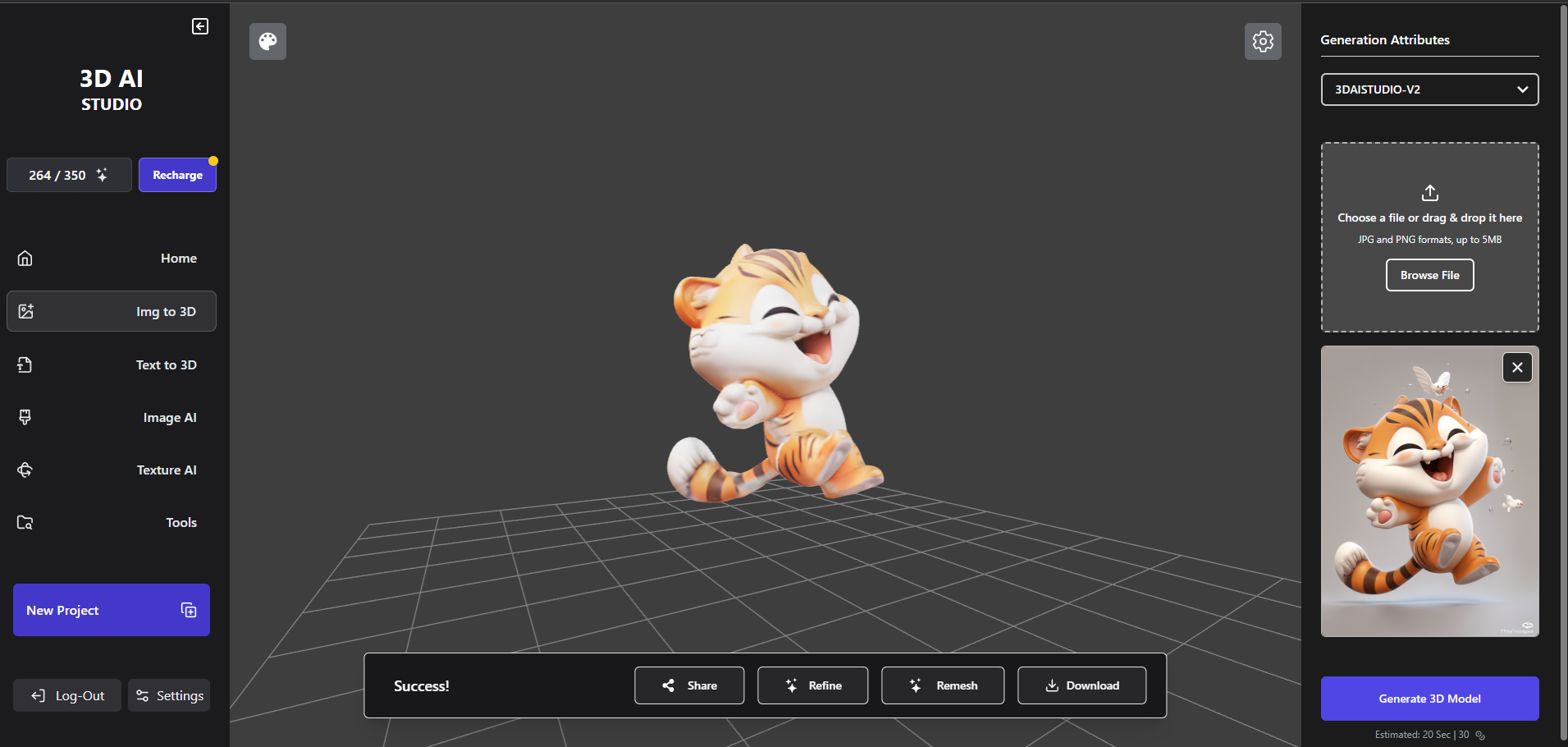
One of the most impressive developments in this field is image to 3D model technology. Instead of making objects from scratch technology analyzes images to detect shapes as well as depth, and reconstructs them into a fully usable 3D asset.
This feature is especially beneficial in industries that rely on speed and accuracy in visuals. Game developers can prototype objects quickly, architects can see the structure before it is built, and product designers can experiment with ideas without the need for lengthy modeling sessions. Not only educators and marketers that benefit from the capability to convert visual concepts into interactive 3D content.
The time savings are significant. It’s now possible to complete the same thing that used to take days of modeling, texture and optimization in only half the time. This allows teams to have more time to refine ideas instead of building each part by hand.
AI 3D Modelling is Growing in Popularity
AI 3D models are in the spotlight because they ease complex workflows. Artificial intelligence systems that are built on massive datasets are able to create realistic models and materials that are consistent and accurate.
This speed doesn’t just increase productivity, but also encourages innovative thinking. Designers can try multiple versions of a concept in a short period, compare results, and select the best one. The speed of iteration is essential for industries like film production and virtual reality, as well as advertising, and ecommerce visualisation.
Another major benefit is accessibility. Modern platforms let people develop professional-quality content even if they’ve got little or no 3D knowledge.
Integrate seamlessly into workflows for professionals
Professionals, the compatibility of their software is as important as speed. Modern 3D models AI platforms are built to seamlessly integrate into existing pipelines. Models can be exported to widely supported formats such as FBX, OBJ, GLB, STL, and USDZ making them easy to incorporate into game engines, rendering software as well as 3D printing systems.
Databases of assets that are organized play an essential role in an efficient production. Having every generated model stored in a searchable library helps teams to keep their projects organized and easily manageable. Filtering through tags and downloading large files and easily accessing previous versions are all methods to cut down on time.
Privacy and security are becoming more common and offer creators the freedom to utilize their work in commercial and creative projects as soon as they are completed.
AI Tools: Precision and Control
The common belief is that automation eliminates control, however, modern AI for 3D modeling tools typically include detailed adjustment features. Users can specify precise measurement, establish pivot points and make sure of the correct placement of objects within scenes. These capabilities are essential to simulation, animation, and architecture visualization, where precision is important.
Artificial intelligence can also assist with the generation of textures, which allows creators to create realistic-looking materials in a short time. It cuts down on the time for manual painting, while maintaining a professional look.
Future of 3D Model AI
As AI continues to develop, 3D models AI will provide more options. Advanced AI systems could be able to design complete environments, optimize assets automatically and adjust models for different platforms without any additional steps.
Specially designed platforms for this use are already providing proof of the capabilities of these software tools. 3D AI Studio the ultimate studio for 3D assets reflects the new generation of software that is designed to ease creation, speed up workflows, and aid creators get from concept to final model with minimal effort.
Conclusion
How digital content is created is changing with the ability to create a fully-developed asset in a matter of hours has revolutionized. Technology for converting images into 3D models as well as advanced AI 3D models tools allow creators to transcend traditional and slow workflows.
As the technologies improve as they advance, they’ll play a larger influence on industries ranging from entertainment and gaming to education and engineering. This will allow 3D creation of the highest quality faster, more intelligent and simpler than ever.